
Coffee Shop Blog
Charlie Starr – Nutrient Management Profile
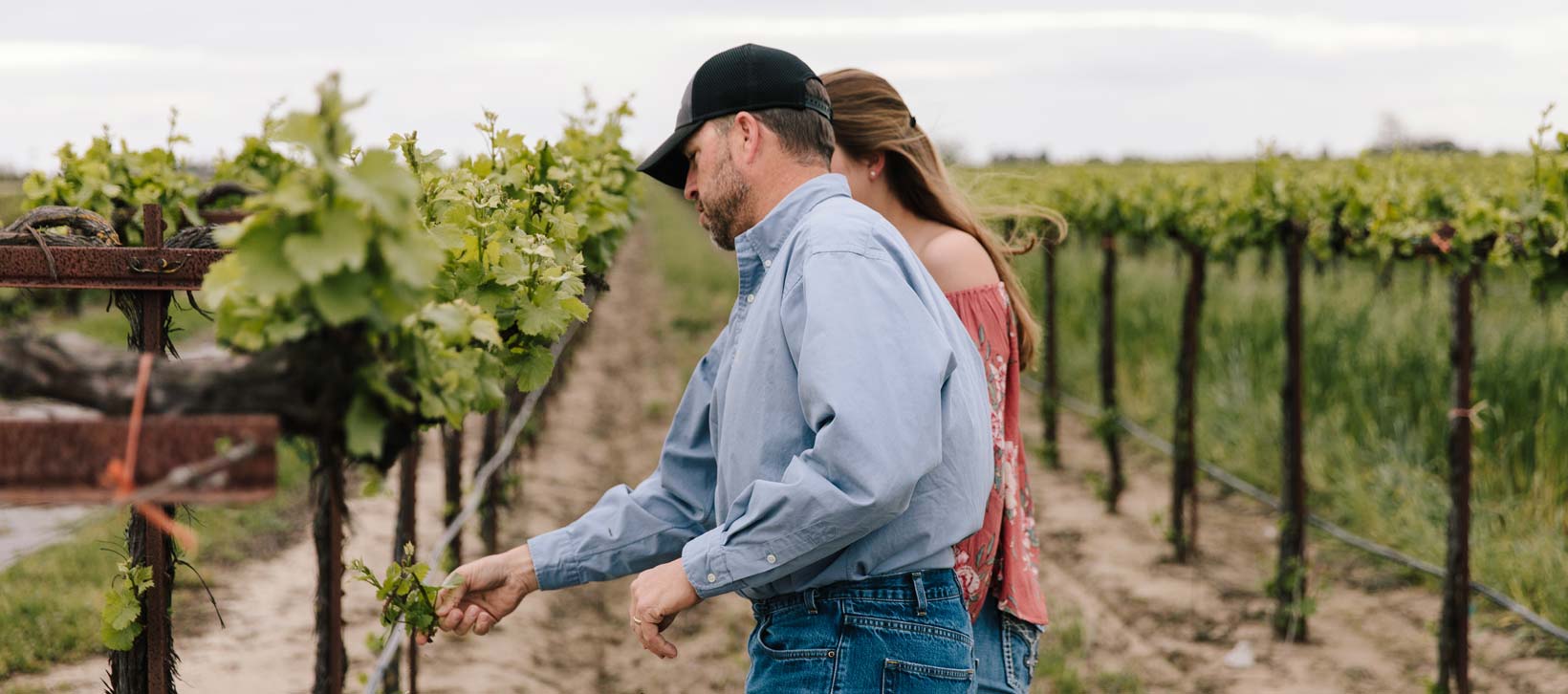
Nutrient Management planning Charlie Starr grew up around vineyards; today, together with his father and father-in-law, the family oversees around 100 acres of vines in Acampo, California. Since the 1960s, the families have been expanding vineyard acreage, with the...
Water Management – Part III
Introduction Thank you for reading Part III of this three-part series on water management. In Part I we discussed the importance of having a written water management plan, the advantages of Regulated Deficit Irrigation (RDI), monitoring water quality and soil...
Water Management — Part II
Introduction Thank you for reading Part II of this three-part series on water management. In Part I we discussed the importance of having a written water management plan, the advantages of Regulated Deficit Irrigation (RDI), monitoring water quality and soil...
In the Vineyard with Paul Verdegaal – Looking Back at 2014
The 2014 season was a challenging and difficult year that ended well. Growers and winemakers deserve a tip of the hat. There were however some scattered misfortunes. The harvest wrapped up in the second week of October for most, although a few blocks were harvested...
Water Management — Part I
Introduction Describing the issue of water in California, Mark Twain once intoned, “whiskey’s fer drinkin’, water’s fer fightin’.” Winegrapes use less water than most crops, so we do a little less fighting than some, but we still need to manage our most precious...
Lodi Weather