
THURSDAY, OCTOBER 8, 2026. BY STAN GRANT, VITICULTURIST.
Part Two of a Three-Part Vineyard Mineral Nutrient Management Lab Analysis Series. For Part One: Soil, click HERE.
Among mineral nutrient management concerns, it is easy to overlook the importance of the water applied to vineyard soils (Figure 1, below). And yet, applied water affects the mineral nutrients status of soils, depending on its chemical makeup, by either adding or removing them. Additionally, the quality of applied water effects the performance of the most important method of in-season mineral nutrient delivery in vineyards, which is application with drip irrigation. Given the importance of water to the management of mineral nutrients in vineyards, evaluation of analysis results of carefully collected water samples is valuable topic.
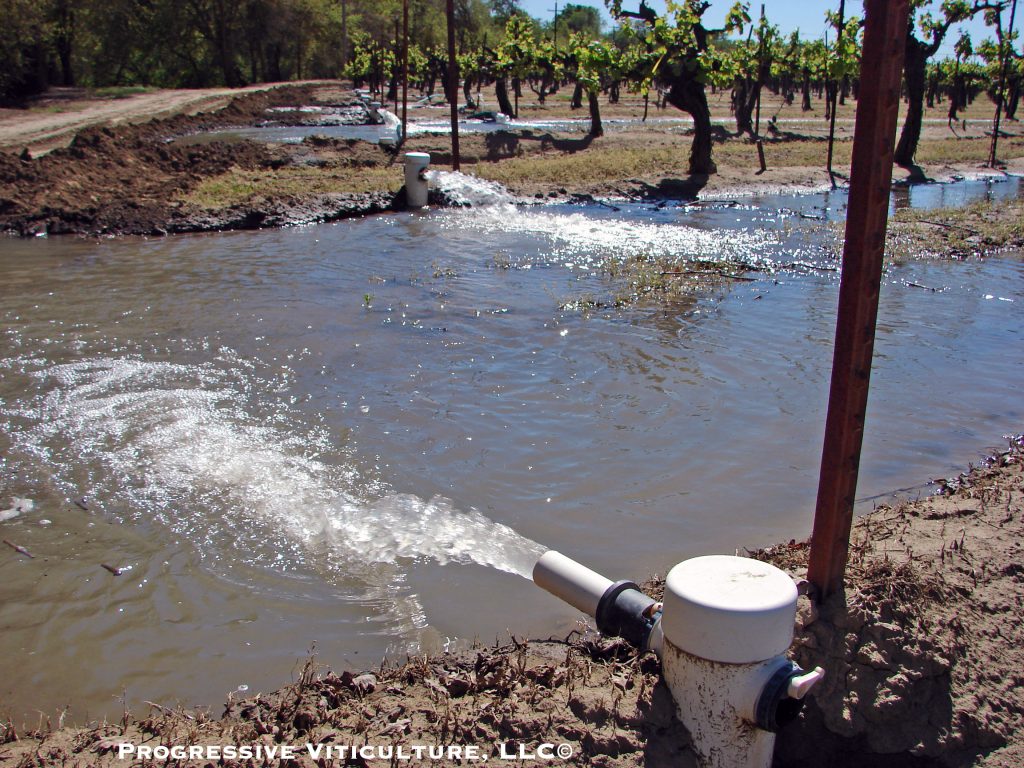 Figure 1. Irrigation water is an important element of vineyard mineral nutrient management. Source: Progressive Viticulture, LLC©
Water is a simpler chemical medium than soil, which was the focus of the first article in this series on the evaluation of laboratory analysis results in vineyard mineral nutrient management. Unlike soils, water has negligible buffering effects on the mineral elements within it and they are, by and large, either dissolved or suspended. Still, as we shall see, the chemistry of irrigation waters is not always straightforward, as factors including temperature, pressure, and pH can affect it.
When Water is a Mineral Nutrient Remover
Whether a water is a remover or contributor of mineral nutrients depends in its dissolved mineral ion content. As in the analysis of soils, total dissolved solids (TDS) constitute all dissolved minerals present in a water sample. Again, similar to soil analysis, the soluble mineral content of water is most commonly reported as electrical conductivity (ECw) due to the current carrying capacity of the positive and negative charges of mineral ions (cations and anions, respectively).
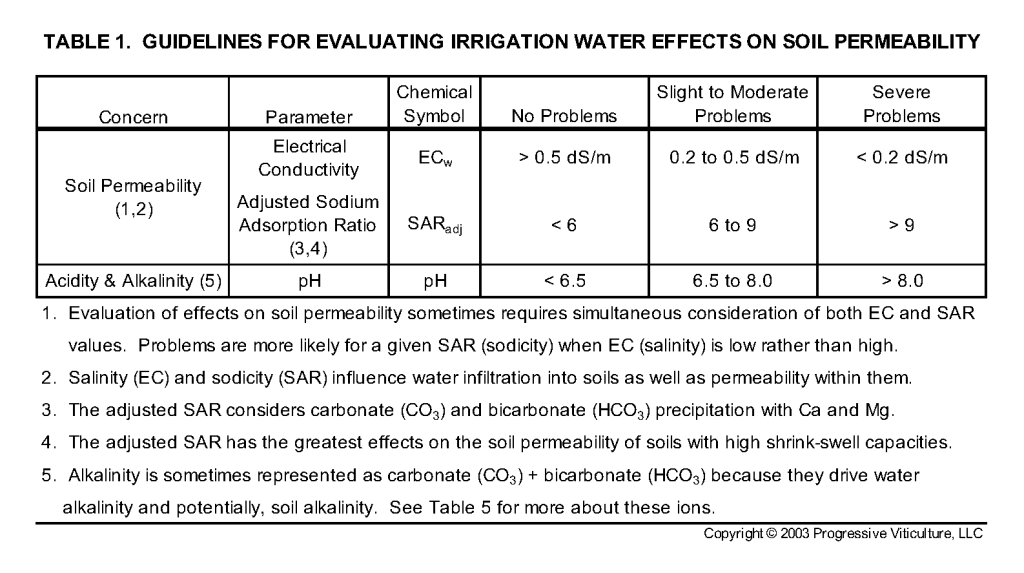
Nearly pure irrigation waters contain very low concentrations of dissolved minerals and correspondingly, they have very low electrical conductivity (less than 0.2 to 0.5 dS/m) (Table 1, above). Irrigation waters very low in dissolved minerals damage soils, stripping minerals as they percolate downward through them. With repeated applications of such waters, soils become less fertile and more acidic.
Vineyard irrigation with river and irrigation district water originating as melted snow in the Sierra Nevada is such a circumstance (Figure 2, below). Nonirrigated vineyards receiving only rainwater present a similar situation. To a lesser degree, very rainy winters diminish the mineral nutrient content of soils underlying irrigated vineyards.
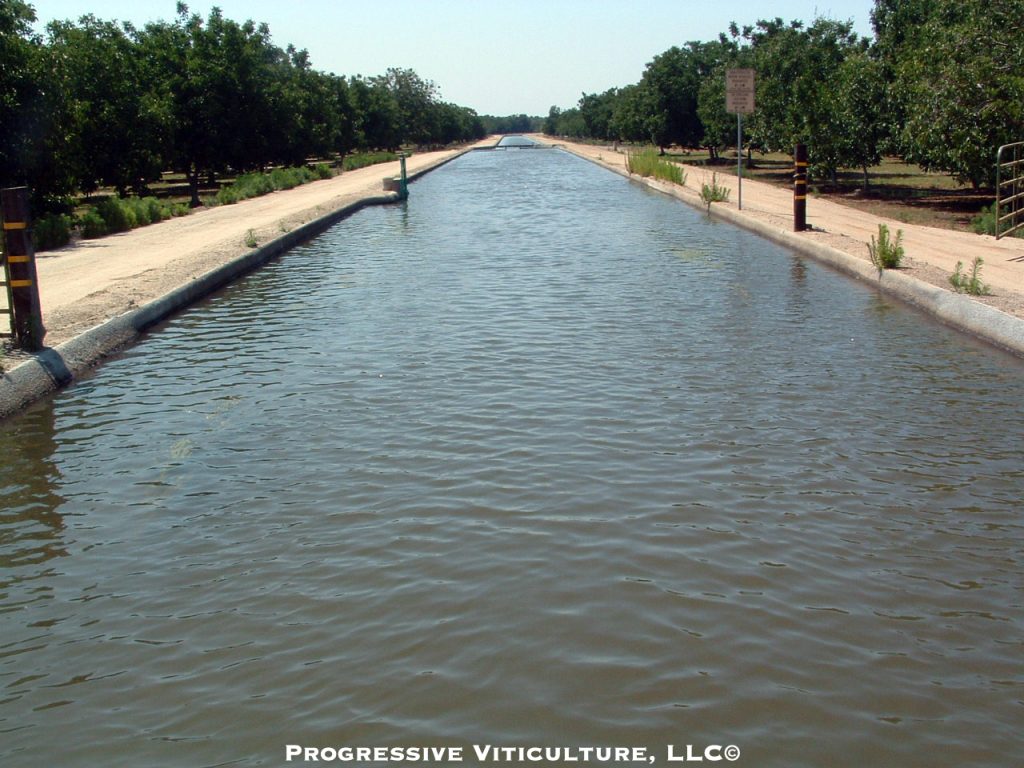 Figure 2. Irrigation district water derived from melted snow is relatively pure. Source: Progressive Viticulture, LLC©
Mineral nutrient depletion and leaching with nearly pure water is most rapid in sandy soils, which are low in clay and organic matter and accordingly, have little capacity to resist (buffer) these erosive effects. These same soils, with their low water holding capacities, require early and frequent irrigations during the growing season, which further accelerates mineral loss compared to finer textured soils. For these reasons, fertigation, which is the application of fertilizers with irrigation water, can be especially beneficial for vineyards on sandy soils.
Additionally, nearly pure water applications induce soil particles to disperse rather than to remain clumped together in aggregates. As a consequence, over time soils irrigated with such waters become less porous and less permeable to air and water, which makes them less favorable grapevine root zones (Table 1). At the same time, soils treated in this way become increasingly prone to surface crusts the impede water intake.
The impacts of nearly pure irrigation water on the physical character of soils diminish the efficiency of mineral nutrients applied as fertilizers. In especially challenging cases, vineyard managers regularly inject solution grade gypsum into their irrigation systems to increase the dissolved mineral concentration and electrical conductivity of nearly pure water, which lessens corrosive effects and loss of soil structure.
When Water is a Mineral Nutrient Contributor
Well waters carry mineral nutrients in varying amounts, depending mainly on the chemical composition of water reaching and recharging the underlying aquifers they draw upon. Due to their ion load, deep aquifers in California are many times alkaline (Table 1).
In the California interior, magnesium and calcium are commonly present in relative abundance in well waters. These two minerals are among the so-called macronutrients, which are mineral nutrients plants require in relatively large quantities. Thus, these well waters have fertilizer value.
These same well waters, however, which are commonly alkaline, are high in bicarbonate and if the pH is very high (pH > 8), they contain carbonate. Both bicarbonate and carbonate combine with calcium and magnesium to make solid carbonate compounds, especially as water evaporates and ions concentrations increase. These reactions diminish the calcium and magnesium fertilizer value of well waters.
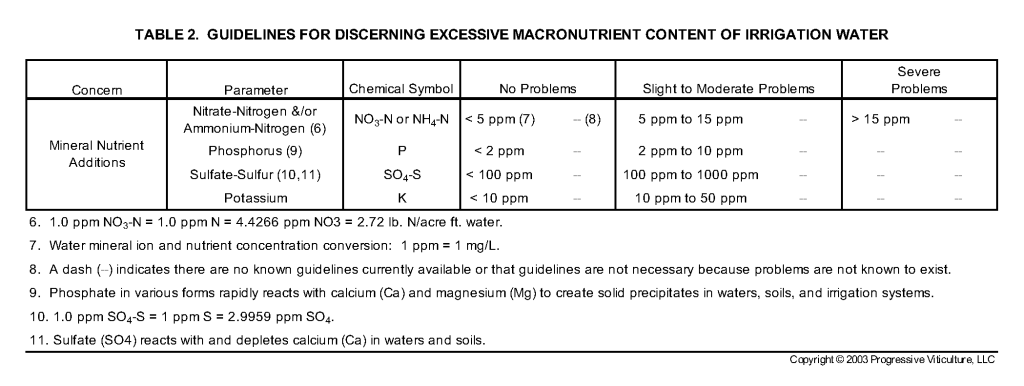
In traditional agricultural areas, especially where the aquifers lay near the land surface, well waters are sometimes high in other macronutrients. Abundant macronutrients may include nitrate-nitrogen, phosphorus, sulfate, and potassium. Some well waters contain amounts of one or more macronutrients sufficient to satisfy or exceed the in-season demand for them within grapevines (Table 2, above). These mineral nutrients may originate as uncontrolled excesses from livestock operations, crop fertilizers, and agricultural product processing.
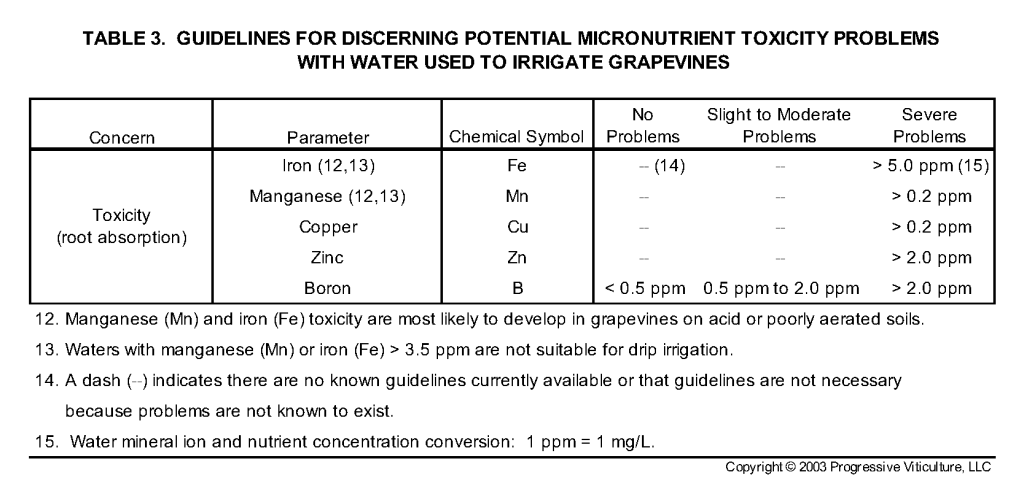
Some well waters contain significant concentrations of one or more of the micronutrients, which are mineral nutrients required in comparatively small quantities by grapevines. These include iron, manganese, copper, zinc, and boron. In some instances, a micronutrient concentration is very high in an irrigation water and after roots take it up, it accumulates to toxic levels in foliar vine tissues (Table 3, below). In alkaline waters, carbonates react with some of the micronutrients to form solid precipitate compounds, thereby decreasing their concentrations and accessibility to grapevines.
When Water Contains Excess Minerals
There are also well waters excessively rich in minerals. These waters are saline because within them positively charged minerals, such as calcium, pair and oftentimes times bond to negatively charged minerals, such as sulfate, to form salts. Saline irrigation waters are a concern because soils receiving them, especially soils under drip emitters, can become saline (Table 4, below). In soils, salinity creates energy gradients grapevines have to work against to take up water, making them prone to water stress.
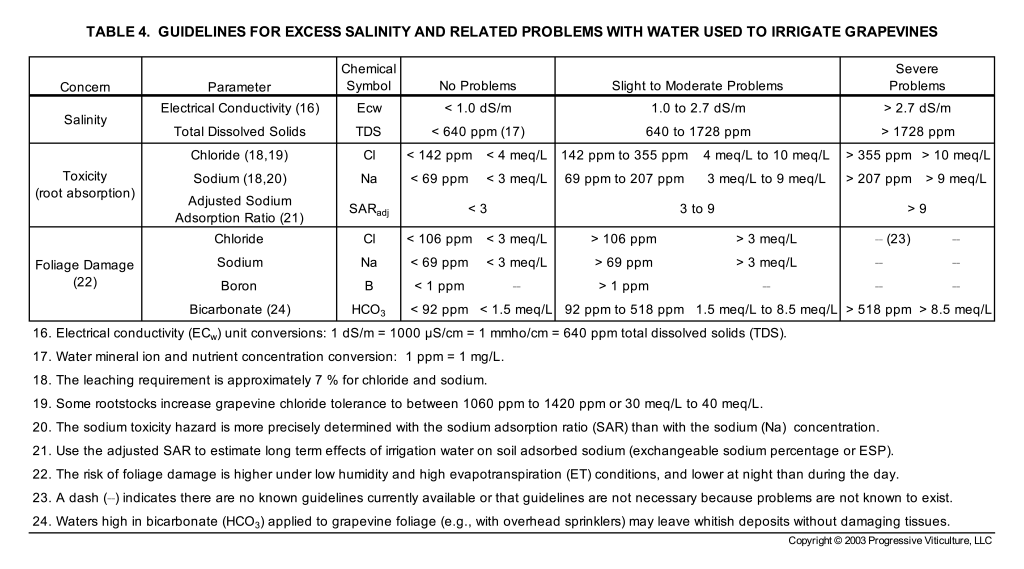
Among minerals contributing to water salinity, sodium and chloride are sometimes present at concentrations potentially toxic to foliar tissues after root uptake and translocation to grapevine shoots. The sodium adsorption ratio (SAR), rather than the sodium concentration, is normally the most reliable indicator of sodium toxicity risk (Table 4).
Additionally, the concentration of sodium adsorbed on the surfaces of soil particles [i.e., the soil exchangeable sodium percentage (ESP) or sodium base saturation] is proportionate to the average irrigation water sodium adsorption ratio when the two are in equilibrium. Such occurrences are most likely mid to late season under regulated deficit irrigation. In this way, ample sodium in irrigation waters favors soil particle dispersal and poor soil permeability to air and water (Table 1).
Sodium and chloride can also damage foliage tissues directly when applied externally, as with solid set sprinklers (Table 4). Foliage damage is also possible with direct application of waters containing boron and bicarbonate. The risk of mineral induced foliage damage is greatest when temperatures and the rate of evaporation are high.
When Water Effects Mineral Nutrient Delivery
It is difficult to overstate the importance of drip irrigation to efficient mineral nutrient management. This technology has the capacity to uniformly apply fertilizers containing soluble mineral nutrients mixed with irrigation water at opportune times and at rates appropriate for vine needs, vineyard conditions, and vineyard management goals (Figure 3, below). However, such beneficial outcomes are possible only when drip irrigation systems perform as designed.
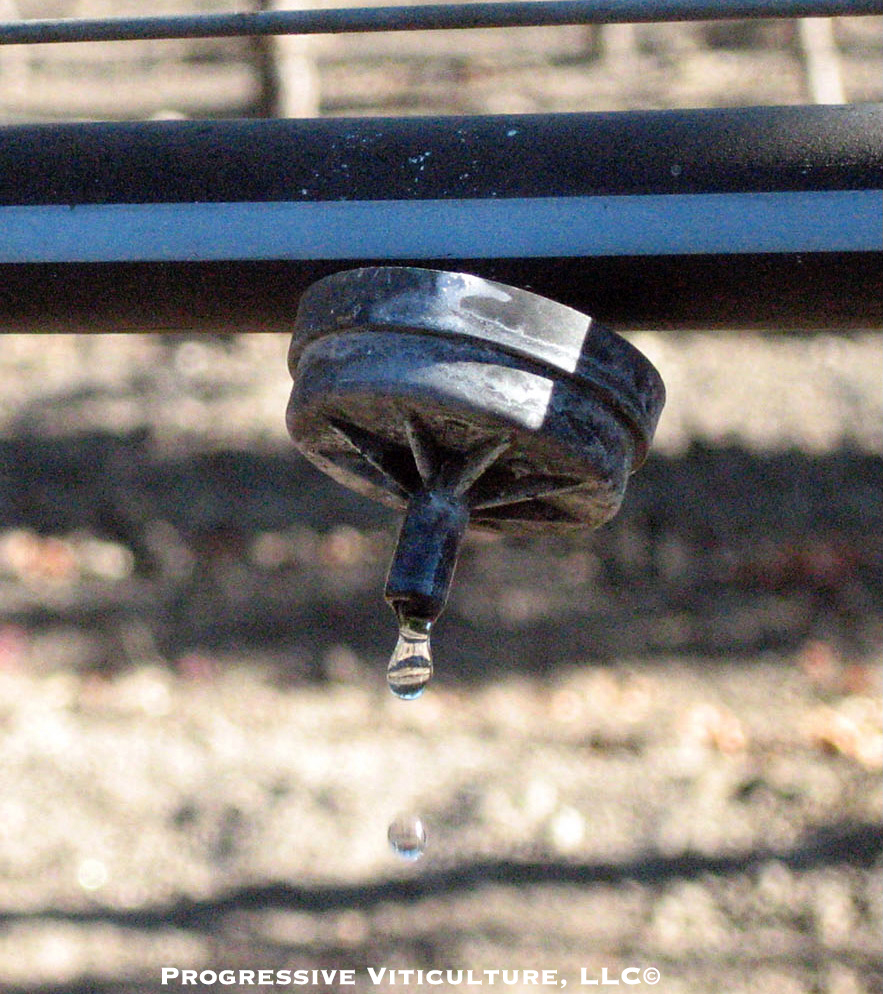 Figure 3. Drip irrigation is a highly effective in-season mineral nutrient delivery system. Source: Progressive Viticulture, LLC©
Clogging agents are among the most frequent causes of compromised drip system performance. They do so by interfering with drip emitter function and blocking the pathways of water movement within and out of drip emitters.
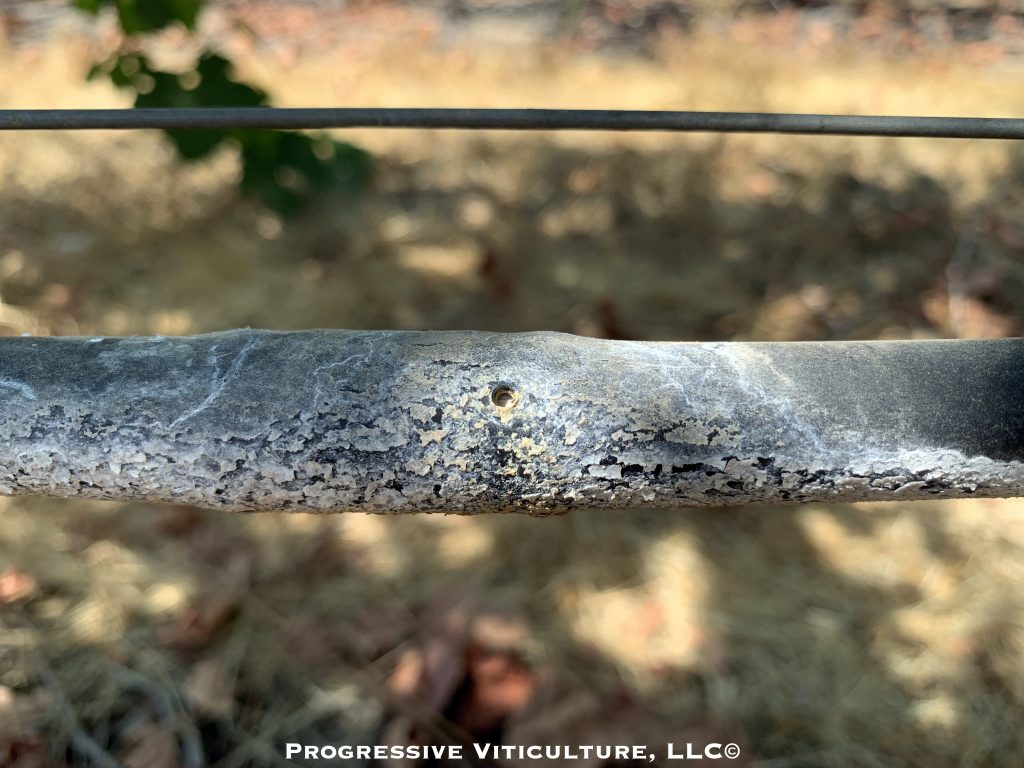 Figure 4. Mineral precipitation in drip emitters inhibits their performance. Source: Progressive Viticulture, LLC©
For drip irrigation systems carrying well waters, perhaps the most common clogging agents are solid carbonate precipitates (Figure 4, above). As mentioned in a preceding section of this article, they form when bicarbonate and carbonate react with calcium and magnesium (Table 5, below). Following drip irrigation system shut down, these minerals concentrate as water evaporates and temperatures in drip lines increase. These phenomena increase the likelihood of precipitation reactions. To limit such reactions and prevent clogging, inject acid towards the end of an irrigation to decrease the alkaline pH of waters a value of about 6.2 or somewhat lower.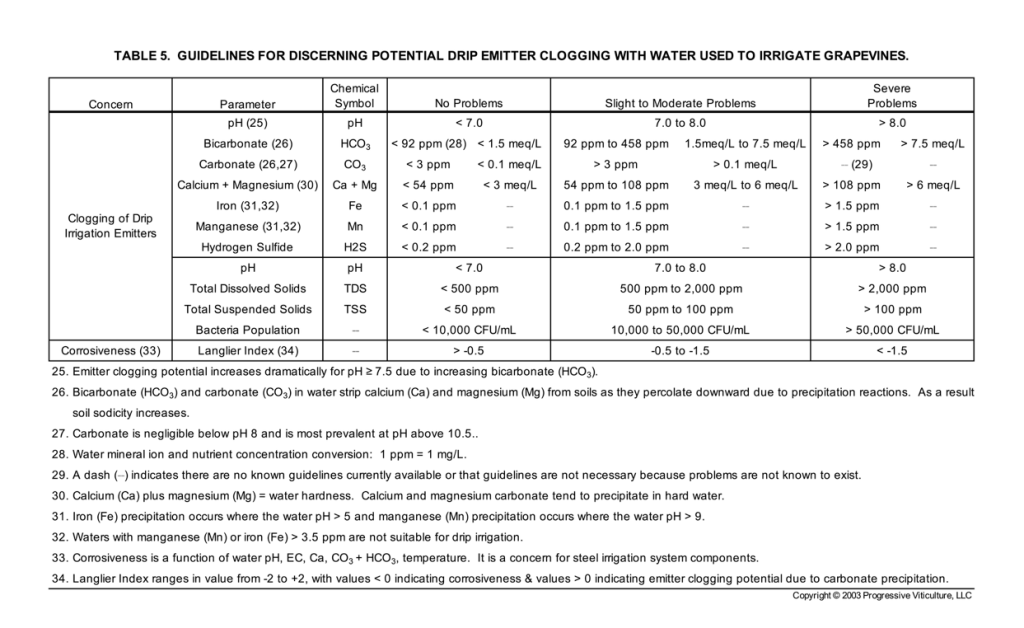
With changes in temperature and pressure during pumping, soluble iron and manganese in groundwater can change into insoluble forms that precipitate in drip irrigation emitters (Table 5). Sulfide in groundwater can also cause iron and manganese precipitation, as well precipitate itself in emitters. Additionally, hydrogen sulfide promotes the growth of a particular slime forming bacteria, while certain other bacteria in some well waters induce soluble iron to become a clogging agent. Reservoirs and other surface water sources support algae and bacteria with the potential to clog drip emitters even after filtration. Under most of these conditions, chlorine injection can prevent clogging.
In Summary
Water can be a carrier and depositor of mineral nutrients to vineyard soils; conveying those present in well waters, as well as those injected as fertilizer. Water can also be a remover of mineral nutrients in vineyard soils when it is sufficiently pure. At the other extreme, waters excessive in minerals create problems that diminish mineral nutrient use efficiency. And in many circumstances, the condition of the water may favor drip emitter clogging, which impairs uniform water and fertilizer application to vineyards.
Given these prospects, understanding the condition of water is indeed an essential element of holistic and sustainable vineyard mineral nutrient management. Evaluation of the analysis results of carefully sampled water using the guidelines presented in this article or from another trusted source makes such understanding possible.
Careful sampling involves allowing irrigation pumps to run long enough to acquire water representative of the source, which may take 20 minutes or longer. Contact the laboratory selected to perform the analysis for specific sample collection guidance. Also, seek sound professional advice regarding appropriate maintenance measures for your drip system based on the condition of your irrigation water.
The author dedicates this article to John Baranek, his friend and mentor.
This article was originally published in the Mid Valley Agricultural Services April 2009 newsletter and was updated for this blog post.
Further Reading, including primary guideline sources
Ayers, RS. 1974. Salt management: California’s most complex water problem. University of California Division of Agricultural Sciences.
Ayers, RS, and Westcot, DW. 1985. Water quality for agriculture. Food and Agriculture Organization of the United Nations (FAO) irrigation and drainage paper.
Ayers, RS. 1983. Irrigation Water Quality. p. 49-51. In Soil and Plant Tissue Testing. Reisenauer, HM (ed.). University of California Division of Agricultural Sciences Bulletin 1879.
Battany, M. Undated. Irrigation Water Analysis Guidelines.
Burt, C, O’Connor, K, and Ruehr, T. 1998. Fertigation. Irrigation Training and Research Center, California Polytechnic State University. San Luis Obispo, CA.
Burt, CM, and Styles, SW. 1994. Drip and microirrigation for trees, vines, and row crops. Irrigation Training and Research Center, California Polytechnic State University. San Luis Obispo, CA.
California Plant Health Association Soil Improvement Committee. 2002. Western fertilizer handbook. Interstate Publishers. Danville, Il.
Chapman, HD, and Pratt, PF. 1961. Methods of analysis for soils, plants, and waters. University of California Division of Agricultural Sciences Publication 4034.
Cross, N. November 1991. Water quality for irrigation of grapes. Australian Grapegrower and Winemaker.
Grant, S. May/June 2002. Balanced soil fertility management in wine grape vineyards. Practical Winery and Vineyard. 24(1): 7-24.
Grant, S. July 18, 2014. Regulated deficit irrigation, Part I. Lodi Winegrape Commission Coffee Shop Viticulture Blog.
Grant, S. August 4, 2014. Regulated deficit irrigation, Part II. Lodi Winegrape Commission Coffee Shop Viticulture Blog.
Grant, S. August 18, 2015. Comprehensive vineyard water management. Lodi Winegrape Commission Coffee Shop Viticulture Blog.
Grant, S. December 16, 2015. Micronutrient management in vineyards. Lodi Winegrape Commission Coffee Shop Viticulture Blog.
Grant, S. November 18, 2019. The many uses and some misuses of gypsum in vineyards. Lodi Winegrape Commission Coffee Shop Viticulture Blog.
Grant, S. March 29, 2020. Foliar symptoms of mineral nutrient problems. Lodi Winegrape Commission Coffee Shop Viticulture Blog.
Grant, S. December 14, 2020. Soil texture and vineyard management. Lodi Winegrape Commission Coffee Shop Viticulture Blog.
Grant, S. May 24, 2021. The seasonality of vineyard mineral nutrient management. Lodi Winegrape Commission Coffee Shop Viticulture Blog.
Grant, S. May 2022. Mineral nutrient management methods: a comparison considering effectiveness and efficiency. Wine Business Monthly.
Grant, S. June 30, 2026. Laboratory analysis in mineral nutrient management: soil. Lodi Winegrape Commission Coffee Shop Viticulture Blog.
Hassan, FA. January 1999. Water quality for microirrigation part 1: essentials of water analysis. p. 20-23. American Vineyard Magazine.
Hassan, FA. February 1999. Water quality for microirrigation part 2: evaluation of water quality. p. 28-31. American Vineyard Magazine.
Neja, RA, Ayers, RS and Kasimatis, AN. 1978. Salinity appraisal of soil and water for successful production of grapes. University of California Division of Agricultural Sciences Leaflet 21056.
Oster, JD, Singer, MJ, Fulton, A, Richardson, W, Prichard, T. Undated. Water penetration problems in California soils: Diagnosis and Solutions. University of California.
Peacock, WL, and Christensen, LP. 2000. Interpretation of Soil and Water Analysis. p. 115-120. In Christensen, LP (ed.). Raisin production manual. University of California ANR Pub. 3393.
Prichard, TL. Undated. Water quality and soil salinity guidelines. Unpublished report.
Schwankl, L, Hanson, B, and Prichard, T. 1995. Micro-irrigation of trees and vines: a handbook for water managers. University of California, Davis.
Schwankl, L, Hanson, B, and Prichard, T. 2008. Maintaining microirrigation systems. University of California Agriculture and Natural Resources Publication 21673.
Smajstrla, AG. April 1995. Causes and prevention of emitter clogging in microirrigation systems. p. 14-17. Irrigation Journal.
Stromberg, LK. 1975. Water quality for irrigation. University of California Cooperative Extension, Fresno County.
Wallace, GA. May/June 1992. Water quality. p. 26-32. Irrigation Journal.
Wheeler, LE, and Brown, PD. March/April 1998. Formation of lime scale in vineyard drip irrigation systems. p. 11-15. Practical Winery and Vineyard.
Have something interesting to say? Consider writing a guest blog article!
To subscribe to the Coffee Shop Blog, send an email to stephanie@lodiwine.com with the subject “blog subscribe.”
To join the Lodi Growers email list, send an email to stephanie@lodiwine.com with the subject “grower email subscribe.”
To receive Lodi Grower news and event promotions by mail, send your contact information to stephanie@lodiwine.com or call 209.367.4727.
For more information on the wines of Lodi, visit the Lodi Winegrape Commission’s consumer website, lodiwine.com.
For more information on the LODI RULES Sustainable Winegrowing Program, visit lodigrowers.com/standards or lodirules.org.